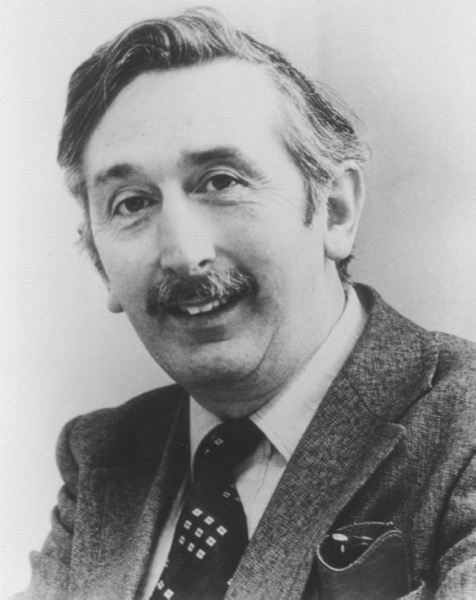
Godfrey Hounsfield
Computed Tomography (CT) scanning and algebraic tomographic reconstruction
“When a direct physical view into an internal system is impossible, take hundreds of multi-angle boundary measurements and reconstruct the internal reality mathematically.”
The Architectural Breakthrough
Prior to 1971, X-rays were flat two-dimensional projections where dense bones obscured soft tissues like brain tumors and blood clots. Godfrey Hounsfield at EMI Laboratories conceived a radical reconstruction technique: rotating an X-ray source and detector around a patient head in small angular increments.
Hounsfield split the cross-sectional slice into a mathematical grid of pixels. By processing thousands of simultaneous linear equations on a minicomputer, his algorithm calculated the precise X-ray absorption coefficient for every internal voxel (measured today in Hounsfield Units), rendering internal soft tissue visible without exploratory surgery.
Connected Advisory & Architecture Research
Cross-Disciplinary LineageHounsfield computed tomography proved that algorithmic cross-sectional reconstruction from noisy external projection rays can uncover internal structures without destructive disassembly. This algorithmic reconstruction directly parallels Validating an Unprecedented Model Before Scaling Capital and The Architecture of Validation.
Attribution & Historical Context
Hounsfield built the prototype CT scanner at EMI Central Research Laboratories; Allan Cormack independently developed the underlying Radon mathematical reconstruction equations.