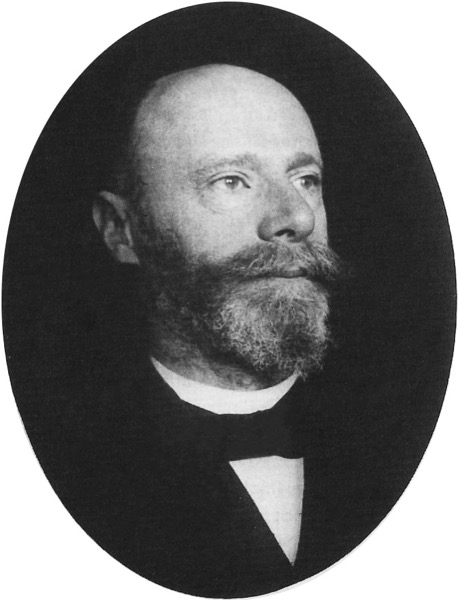
Willem Einthoven
String galvanometer and clinical electrocardiography (ECG/EKG)
“Complex internal physiological states can be monitored non-invasively if instrumentation is sensitive enough to capture tiny electrical potential differentials.”
The Architectural Breakthrough
At the turn of the 20th century, doctors could only evaluate the living human heart through acoustic auscultation (stethoscopes) and manual pulse palpation. Willem Einthoven recognized that the cardiac muscle generated subtle electric currents that diffused through bodily fluids to the skin surface.
In 1901, Einthoven engineered the string galvanometer: a microscopic silver-coated quartz filament suspended between powerful electromagnetic poles. When minute microvolt currents from a patient hands and feet passed through the string, it deflected across optical lenses that projected its motion onto photographic paper, establishing the P-Q-R-S-T electrical signature of cardiac health.
Connected Advisory & Architecture Research
Cross-Disciplinary LineageEinthoven string galvanometer transformed minute, undetectable cardiac electrical potentials into calibrated clinical waveforms. In modern software, non-invasive telemetry tracing and low-overhead instrumentation rely on Einthoven precision, preventing the diagnostic collapse detailed in The Failure Mode No Dashboard Shows.
Attribution & Historical Context
Einthoven developed the string galvanometer at Leiden University, assigning the letters P, Q, R, S, and T to cardiac waveform deflections, winning the 1924 Nobel Prize.