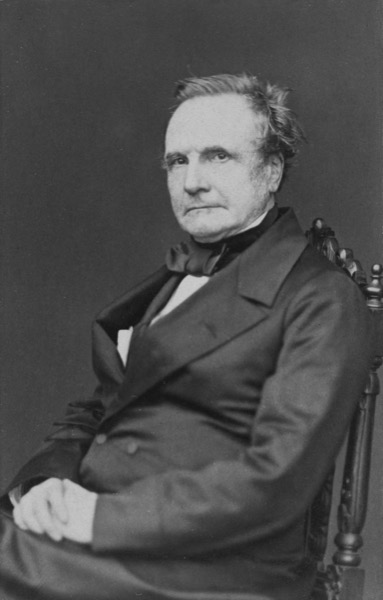
Charles Babbage
Analytical Engine mechanical general-purpose computer
“Separating state storage from execution logic is the foundational design pattern of all durable computing architectures.”
The Architectural Breakthrough
In 1837, Charles Babbage conceptualized the Analytical Engine, shifting computation from fixed-function mathematical tables to general-purpose programmable mechanics. His critical insight was architectural: separating the Store (memory holding numbers) from the Mill (the processing arithmetic unit), coordinated via punched cards borrowed from Jacquard textile looms.
Before Babbage, calculating machines were hardwired calculators that performed single operations. The Analytical Engine introduced conditional branching, looping, and micro-programmed control sequences, defining the theoretical topology that electronic computing would formalize a century later under von Neumann.
Connected Advisory & Architecture Research
Cross-Disciplinary LineageBabbage physical separation between store and mill directly mirrors modern database read-write replica sharding and decoupled compute-storage paradigms. His struggle against manufacturing tolerances previews modern technical debt unit economics, the operational imperative for eliminating single points of failure, and why systems fail at the seams between decoupled components.
Attribution & Historical Context
Babbage designed the mechanical difference and analytical engines; physical completion was limited by contemporary machining tolerances, with crucial programming algorithms contributed by Ada Lovelace.