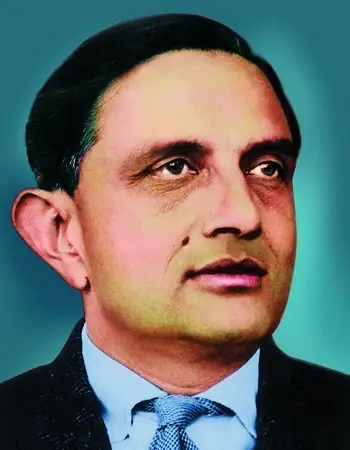
Vikram Sarabhai
Founded Indian Space Research Organisation (ISRO), PRL, and SITE instructional television experiment
“Advanced technology need not wait for widespread national affluence; targeted leapfrog infrastructure can solve foundational societal problems directly.”
The Architectural Breakthrough
In 1962, Dr. Vikram Sarabhai established the Indian National Committee for Space Research (INCOSPAR), which evolved into ISRO in 1969. While global superpowers pursued the Cold War Moon race for geopolitical prestige, Sarabhai explicitly defined a distinct mission: using space technology to solve real human problems in agriculture, weather forecasting, and mass rural education.
In 1975, his vision culminated in the Satellite Instructional Television Experiment (SITE), using NASA ATS-6 satellite to beam educational agricultural and health programming directly into 2,400 remote Indian villages using community television sets, bypassing decades of terrestrial cabling lag.
Connected Advisory & Architecture Research
Cross-Disciplinary LineageSarabhai systems philosophy: leapfrogging legacy intermediary technologies by applying bleeding-edge aerospace capabilities directly to grassroots socio-economic development, is modern sovereign technology leadership. We follow Sarabhai blueprint in Project Bharat: Documenting Grassroots Realities and Fractional CTO Engagements Through Growth Inflections.
Attribution & Historical Context
Sarabhai established the Physical Research Laboratory (PRL) in 1947, initiated the Thumba Equatorial Rocket Launching Station in 1963, and founded ISRO in 1969.