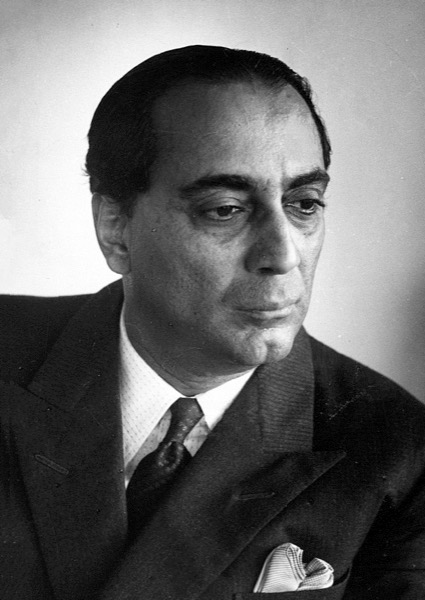
Homi J. Bhabha
Three-stage nuclear power programme, TIFR, and Bhabha scattering theory
“When domestic resources differ fundamentally from global defaults, engineer an architecture from domestic reserves rather than importing foreign fuel dependencies.”
The Architectural Breakthrough
In 1944, theoretical physicist Homi Jehangir Bhabha wrote to the Sir Dorabji Tata Trust proposing an institute for fundamental physics before India achieved independence. Recognizing that India possessed vast reserves of thorium (monazite sands) but scarce domestic uranium, Bhabha conceived the three-stage nuclear power programme.
The architecture was brilliant: Stage 1 uses natural uranium in Heavy Water Reactors to produce plutonium; Stage 2 uses Fast Breeder Reactors with plutonium to breed U-233 from thorium; Stage 3 uses U-233 with thorium to produce self-sustaining, long-term energy independence.
Connected Advisory & Architecture Research
Cross-Disciplinary LineageBhabha three-stage nuclear fuel cycle: designing an architecture that converts domestic thorium reserves into nuclear self-reliance across decades, illustrates long-horizon architectural roadmaps. His strategy inspires our advisory in The Sand Mandala Strategy and Rebuilding an Architecture Designed to Be Dismantled.
Attribution & Historical Context
Bhabha formulated relativistic electron-positron scattering (Bhabha scattering) in 1935 and founded the Tata Institute of Fundamental Research (TIFR) and Atomic Energy Establishment, Trombay (now BARC).