The Leadership Skill Nobody Puts on a CV
Early in a company's life, the founder's involvement is an advantage. Decisions are fast, context is shared, and a difficult problem can be resolved by walking across the room.
Then the company grows.
The same involvement becomes a bottleneck. The founder still approves decisions the team is capable of making. The CTO still solves problems the organisation should have learnt to prevent. The leader remains effective, but the organisation has stopped becoming independent.
Nothing about the person necessarily got worse. The conditions changed.
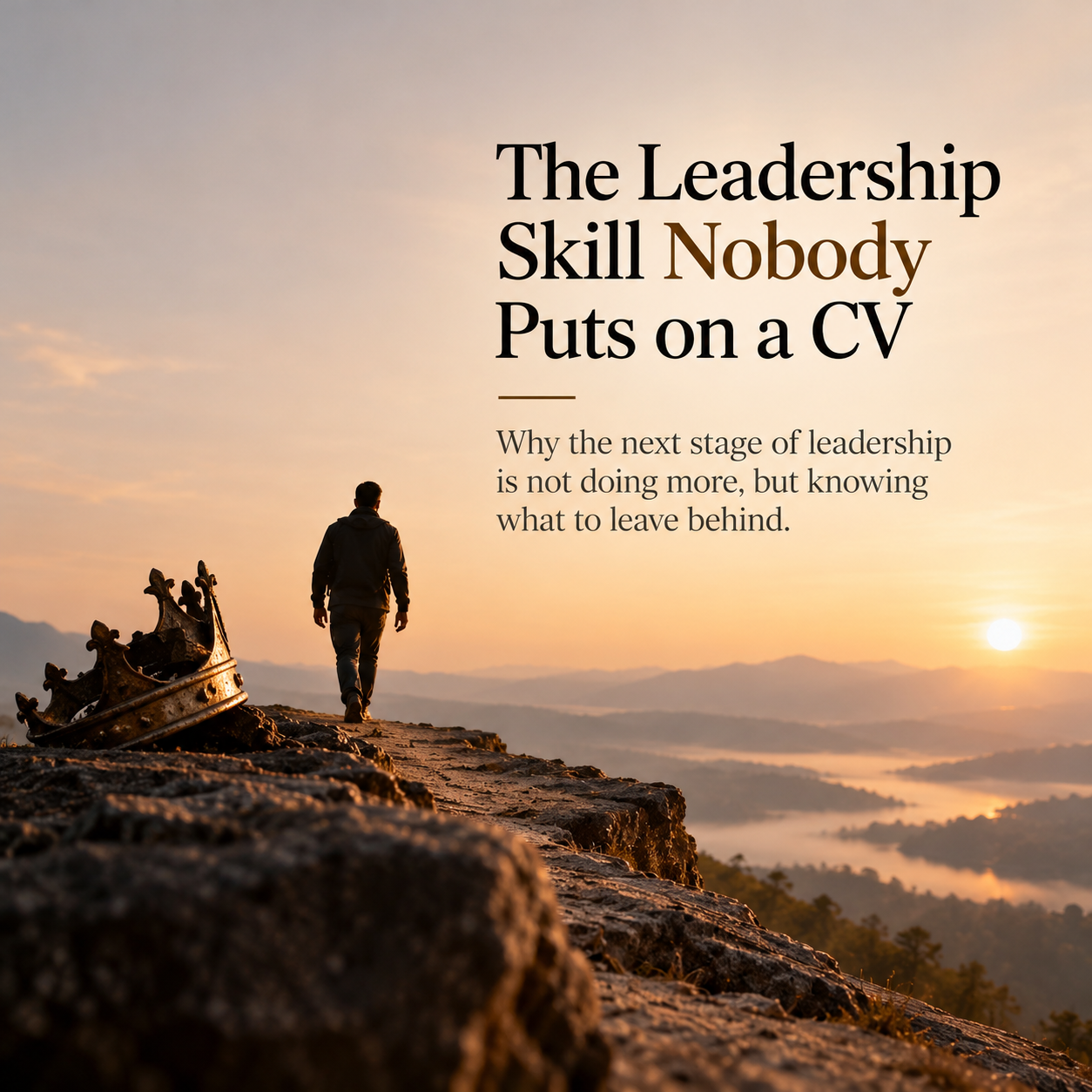
This is where leadership is tested. Not in the ability to do more, but in the willingness to stop doing what once made you valuable.
Buddhist thought offers a useful parallel here. We suffer not only because things change, but because we keep demanding that they remain as they were. In leadership, this often appears as attachment to a former version of our own success.
We hold on to the decisions that worked, the authority we earned, the expertise that made us indispensable. Experience, which should help us recognise change, becomes the reason we resist it.
The irony is that the very behaviour that helped us build something can prevent it from becoming what it needs to be.
A founder must eventually let the team make decisions they would have made differently. An architect must allow a system to evolve beyond the elegance of its original design. A leader must build people who can succeed without constantly seeking approval.
This is not withdrawal. It is a different level of ownership.
Non-attachment, in Buddhist philosophy, does not mean caring less. It means not confusing what we care about with our need to control it. Applied to leadership, the distinction is profound: are we protecting the mission, or protecting our place within it?
That question is uncomfortable because the two can look identical for years.
Perhaps maturity is recognising when our greatest contribution is no longer to be the person who knows the answer, but to build an organisation capable of finding one without us.
Every new stage asks something of us. We talk about acquiring the skills, the capital, and the people required to move forward. We talk less about the identities, habits, and privileges we must be willing to surrender.
Yet growth is rarely just an addition. Sometimes it demands a subtraction.
We spend our lives learning how to become someone. Very few of us learn when that person has served their purpose.
And sometimes, the very thing we must leave behind is the person we had to become to get here.
In order to arrive you have to leave.
Frequently Asked
Why does founder involvement that once helped a company start hurting it as it grows?
The same decisions and problem-solving that drove speed early on become a bottleneck once the team is capable of making them independently; the organisation stops maturing because the founder keeps approving what it has already learned to handle.
What does non-attachment actually mean for a leader, if not caring less?
Not confusing what you care about with your need to control it. Protecting the mission can require releasing the specific decisions, methods, or involvement that once made you indispensable, which is different from disengaging from the outcome.
Continue the Thread
Solution Assembler, Systems Advisor, TEDx Speaker, and Author. For 24+ years quietly stabilizing platforms, eliminating operational drag, and making broken systems predictable.