The Singularity is a Spiritual Mirror And We Are Digitizing Our Shadows
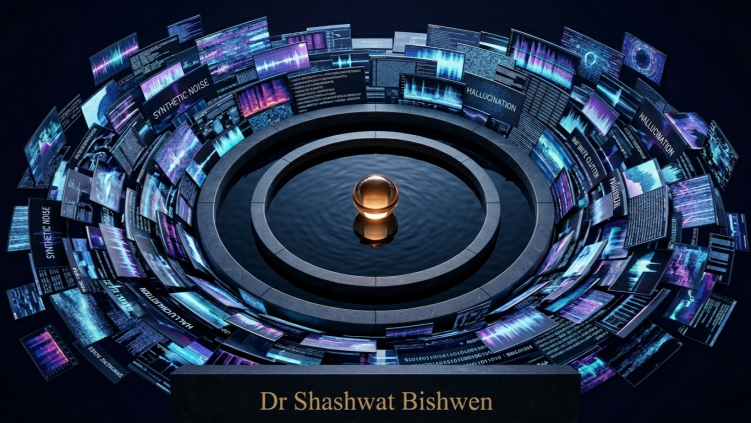
The technological elite treats the Singularity as a purely quantitative milestone: a deterministic point on an exponential compute curve where artificial general intelligence surpasses biological cognition.
What Silicon Valley fails to recognize is that computation does not exist in a spiritual vacuum. Technology is an amplifier. It takes whatever intention is fed into its algorithms and projects it at planetary scale.
If an anxious, extractive culture builds superintelligence, it will not produce a benevolent digital deity. It will produce an ultra-optimized, high-velocity mirror of our own subconscious greed, fear, and desire for total control.
We are digitizing our collective shadows.
When AI agents are trained primarily on engagement loops designed to trigger dopamine spikes, outrage, and speculative consumerism, we are embedding human neurosis into the synthetic substrate of the next century.
Real superintelligence (.si) demands inner calibration before algorithmic scaling. The question is not whether machines can think; it is whether human builders possess the moral and philosophical depth to guide what they create.
Frequently Asked
Does AI amplify the values of the people who build it?
Yes. Technology does not exist in a vacuum; it takes whatever intention is fed into its training and engagement design and projects it at scale. An anxious, extractive culture building AI produces an ultra-optimized mirror of that anxiety, not a neutral tool.
What does responsible AI governance require beyond technical safety work?
Inner calibration in the humans guiding the system, not just algorithmic scaling. The harder question is not whether a model can reason, but whether its builders have the philosophical depth to decide what it should be optimized to do.
Continue the Thread
The Solution Assembler Dispatch
Architectural teardowns, platform stabilization forensics, and cloud FinOps unit economics for founders, CTOs, and board members. Delivered directly to your inbox.