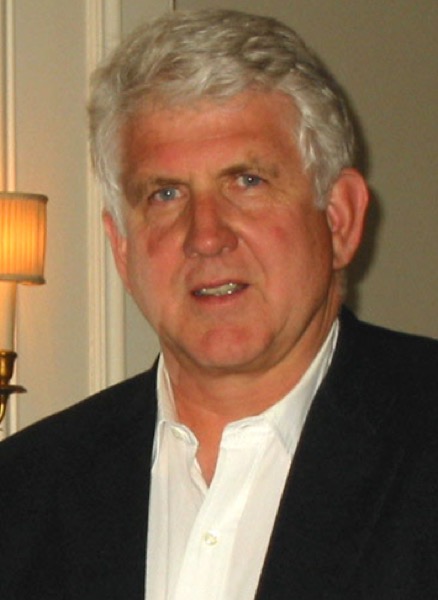
Robert Metcalfe
Ethernet local area network (LAN) and Metcalfe law
“When multiple uncoordinated nodes contend for a shared transmission medium, exponential backoff with random jitter prevents permanent collision deadlocks.”
The Architectural Breakthrough
In 1973 at Xerox PARC, Robert Metcalfe and David Boggs designed Ethernet to connect hundreds of Xerox Alto personal workstations to each other and to the world first laser printer. Metcalfe introduced Carrier Sense Multiple Access with Collision Detection (CSMA/CD).
When two nodes transmit simultaneously and collide on the shared coaxial cable, both immediately halt transmission, emit a jam signal, and wait a random time interval before retransmitting. By doubling the average random wait time after each successive collision (truncated binary exponential backoff), the network automatically stabilizes under burst load.
Connected Advisory & Architecture Research
Cross-Disciplinary LineageMetcalfe CSMA/CD exponential backoff algorithm solved collision mediation on shared communication media, while Metcalfe Law explains runaway data mesh connection costs. We leverage these insights when diagnosing runaway multi-tenant telemetry bills in The Hidden Observability Tax and The Unit Economics of Technical Debt.
Attribution & Historical Context
Metcalfe invented Ethernet at Xerox PARC in 1973 with David Boggs, adapting the packet radio principles of the ALOHAnet.