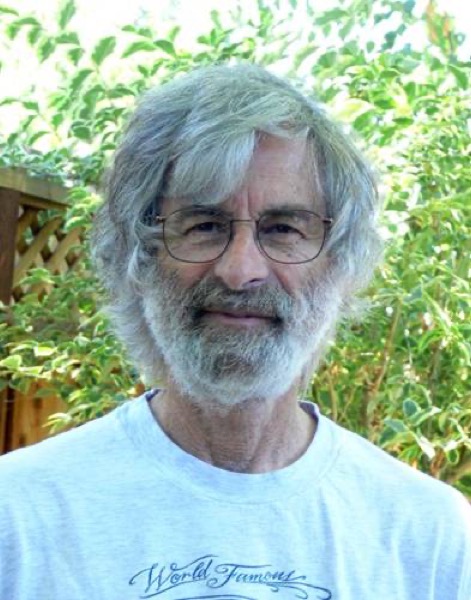
Leslie Lamport
Lamport timestamps, Paxos consensus algorithm, Byzantine Fault Tolerance, TLA+
“Physical time cannot be trusted in distributed systems; correctness requires partial ordering established by logical event causation rather than hardware clocks.”
The Architectural Breakthrough
In 1978, Leslie Lamport published Time, Clocks, and the Ordering of Events in a Distributed System. He showed that physical clocks cannot be synchronized perfectly across networks, and therefore systems must define time through logical causality (the happened-before relation), now known as Lamport timestamps.
In 1998, Lamport published the Paxos consensus algorithm, proving how a network of unreliable, asynchronous nodes can reach consensus on state transitions even when messages are delayed, dropped, or reordered, as long as a quorum remains operational.
Connected Advisory & Architecture Research
Cross-Disciplinary LineageLamport timestamps, Paxos, and formal specification in TLA+ are the mathematical bedrock preventing silent data corruption across modern multi-region databases (CockroachDB, Spanner, Raft). In our engineering reviews, Lamport models guide Preventing State-Transition Failures at Dispatch Scale and executing Zero-Downtime Database Topology Migrations.
Attribution & Historical Context
Lamport single-authored the foundational 1978 logical clock paper and the 1998 Part-Time Parliament paper introducing Paxos; formulated Byzantine generals problem with Robert Shostak and Marshall Pease.