Platform Stabilization: Moving From Firefighting Theater to Boring Reliability
Breaking the organizational addiction to crisis heroism and turning production into a predictable, calm operational asset.
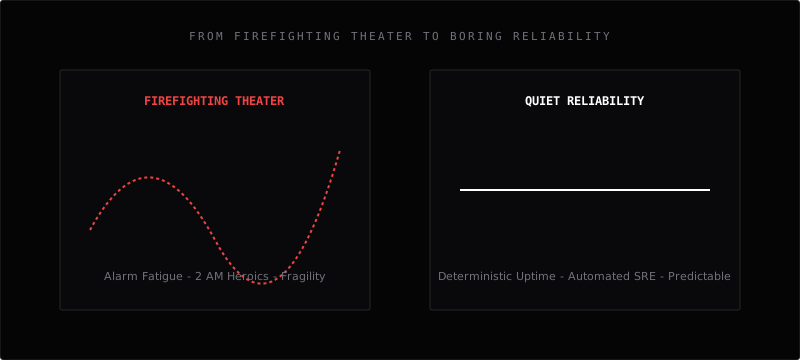
Over the last 23 years of quietly stepping into distressed engineering organizations, I have observed a recurring cultural pathology: the organizational addiction to crisis heroism.
When an unstable production platform collapses under peak customer traffic, the engineering team mobilizes into an emergency war room. Engineers stay awake for 36 hours straight, drinking energy drinks and manually applying emergency patches. When the service is finally brought back online, leadership sends out congratulatory company-wide emails celebrating the heroism of the recovery team.
This is leadership theater at its most destructive.
Heroic recoveries are not milestones of engineering excellence. They are the direct consequence of systemic neglect, architectural fragility, and a total lack of operational discipline. When an organization rewards the firefighter, it subconsciously incentivizes arson.
True engineering maturity is quiet, predictable, and profoundly boring.
When a platform is truly stable, nothing dramatic happens on a Friday afternoon deployment. Alerts do not wake engineers at 3 AM. Releases happen continuously without executive anxiety, and the operations team spends its hours building automated safeguards rather than answering urgent support escalations.
How do we transition an organization from firefighting theater to quiet reliability? First, ruthlessly eliminate alerting noise. When on-call engineers receive 500 alerts a day, alarm fatigue sets in, and genuine catastrophic failure signals get lost in the din. High-signal telemetry means alerts only trigger when customer value or platform availability is materially compromised.
Second, re-engineer deployment pipelines. If shipping code to production requires manual approvals, human verification checklists, and nervous rollbacks, delivery will inevitably grind to a halt. CI/CD pipelines must be automated, sandboxed, and equipped with deterministic rollback triggers.
Third, stabilize multi-tenant resource boundaries. Ensure noisy neighbors in multi-tenant architectures cannot exhaust memory, connection pools, or compute threads reserved for critical workflows.
When platforms achieve deterministic stability, engineering talent stops living in defensive survival mode. They can finally redirect their cognitive bandwidth toward building real product value.
Frequently Asked
Why does celebrating a "heroic" overnight recovery actually encourage more outages?
Heroic recoveries are not milestones of excellence, they are the consequence of systemic neglect. When an organization rewards the firefighter, it subconsciously incentivizes the conditions that create fires in the first place.
What are the three concrete steps to move a platform from firefighting theater to quiet reliability?
Ruthlessly eliminate alerting noise so real signals aren't lost, re-engineer deployment pipelines for automated and sandboxed rollback, and stabilize multi-tenant resource boundaries so noisy neighbors can't exhaust shared capacity.
Solution Assembler, Systems Advisor, TEDx Speaker, and Author. For 24+ years quietly stabilizing platforms, eliminating operational drag, and making broken systems predictable.